
SAP Logistics ManagementImplementation Servicesin the USA.
PrimeS4 provides SAP Logistics Management (SAP LGM) consulting, implementation and integration services for organizations across the United States. We help teams assess solution fit, connect supported logistics workflows with SAP S/4HANA and related systems, and prepare warehouse and transportation operations for dependable execution.
What is SAP Logistics Management (SAP LGM)?
SAP Logistics Management is a cloud-based SAP solution for supported logistics execution processes. It can help organizations coordinate selected warehouse, inventory-related and transportation handoff activities as part of a connected enterprise landscape. Exact features and integrations depend on the SAP product release, licensed scope and technical prerequisites.
PrimeS4 helps US organizations assess whether SAP LGM is appropriate for their operating model and how it should work alongside SAP S/4HANA, SAP Extended Warehouse Management (EWM), SAP Transportation Management (TM) and SAP Business Technology Platform (BTP).
How PrimeS4 supports SAP LGM delivery
- Logistics discovery and fit-gap assessment
- Solution design and implementation planning
- Supported SAP and enterprise integrations
- Data readiness and process validation
- Testing, training, go-live and hypercare
- Application support and optimization
One connected flow.
From warehouse to delivery.
Coordinate warehouse and transportation activities through a more connected logistics process—with clarity from inbound operations to outbound execution.
Discuss your SAP LGM roadmap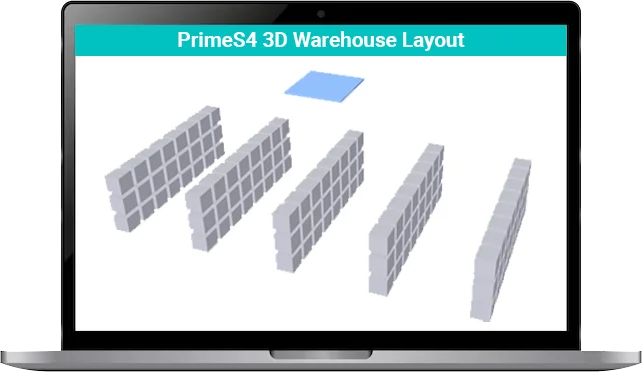
Receive & organize
Inbound goods, warehouse tasks and inventory processes.
Coordinate & execute
Warehouse handling, shipment preparation and logistics activities.
Dispatch & monitor
Outbound fulfillment, transportation handoffs and visibility.
Built around your operational reality. SAP Logistics Management is a cloud solution for coordinating logistics execution. Available capabilities depend on product edition, release and licensed scope.
PrimeS4 helps assess process fit, design integrations, configure supported workflows and prepare teams for operational adoption.
Connected logistics. Clearer execution.
Bring logistics activities and information together across warehouse and transportation workflows. Specific capabilities should be validated against your SAP LGM deployment.
Inbound logistics
Coordinate receipt-related processes and warehouse handling.
Warehouse operations
Support operational workflows for goods movement and handling.
Inventory visibility
Improve access to relevant stock and logistics status information.
Outbound fulfillment
Coordinate picking, packing and dispatch-related activities.
Transportation coordination
Connect delivery planning and execution handoffs where supported.
Process monitoring
Surface logistics events, exceptions and operational progress.
SAP integration
Connect relevant ERP and logistics data through supported interfaces.
Operational reporting
Use available process data to identify bottlenecks and improvement areas.
From logistics strategy to dependable execution.
PrimeS4 supports the implementation lifecycle with process discovery, configuration, integration, testing and post-go-live support.
Logistics process assessment
Review warehouse and transportation processes, business requirements and SAP LGM solution fit.
SAP LGM implementation
Configure supported logistics processes, organizational settings and operational workflows.
Integration & connectivity
Plan and implement relevant connections to SAP ERP, SAP S/4HANA and other systems using supported options.
Data preparation & migration
Prepare master data, validate process data and coordinate cutover activities.
Testing, training & rollout
Validate end-to-end scenarios, prepare users and support phased deployment.
Support & optimization
Provide go-live hypercare, issue resolution and continuous process improvement.
From platform enablement to connected logistics workflows.
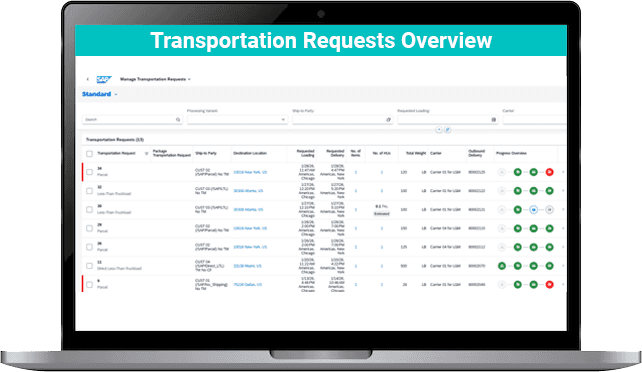
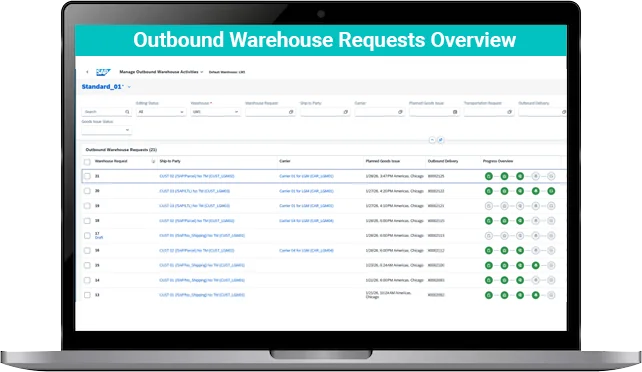
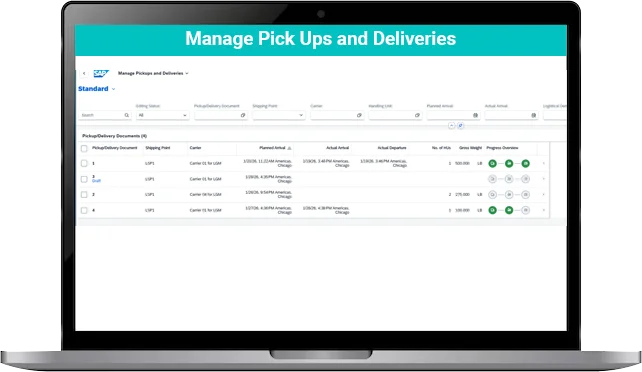
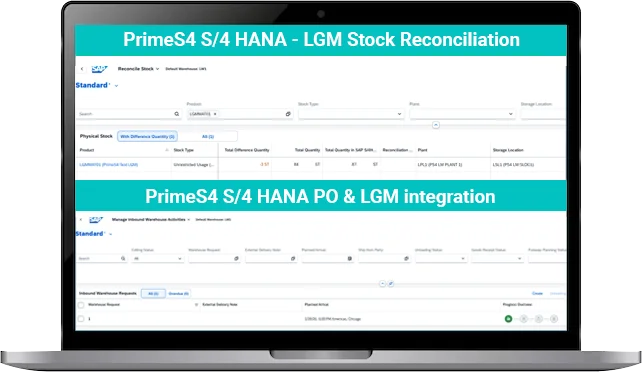
PrimeS4 presents SAP Logistics Management enablement examples covering warehouse layout, transportation requests, outbound warehouse requests, SAP S/4HANA demand integration, freight tendering, stock reconciliation, loading lists and handling-unit labels.
These examples demonstrate the types of configuration and integration activities that can be evaluated during an SAP LGM engagement. They should not be interpreted as evidence of production customer deployments without separate project confirmation.
Explore the workflow screenshotsEvaluate master-data alignment, demand creation, purchasing and stock reconciliation scenarios.
Review layout visualization, outbound requests, loading processes and handling-unit identification.
Assess transportation requests, pickup and delivery processes, and SAP Business Network for Logistics tendering.
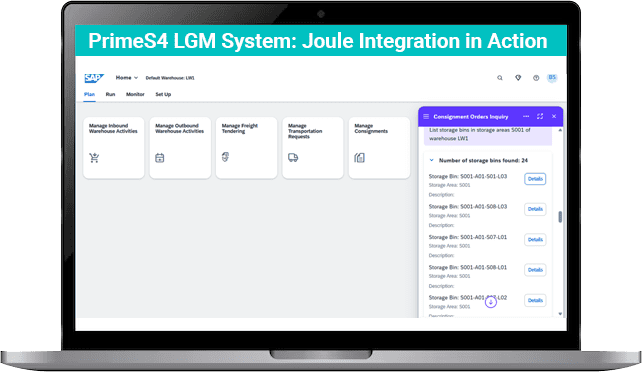
Consider integration architecture and Joule-enabled interactions where supported by the licensed product landscape.
See connected logistics
in action.
Explore the logistics workflows, integration examples and operational screens featured in the original PrimeS4 SAP Logistics Management page.




Connect logistics activities. Execute with confidence.
Coordinate warehouse and transportation-related activities through an integrated execution approach. Results depend on solution scope, process design, data quality and adoption.
Operational visibility
Bring relevant warehouse and logistics events into a more connected view.
Process coordination
Improve handoffs between receiving, handling, fulfillment and dispatch.
Execution efficiency
Reduce manual coordination through appropriately configured workflows.
Exception awareness
Identify process delays and address issues with more timely information.
Scalable operations
Build a foundation for process consistency across suitable sites and workflows.
Why Choose PrimeS4?
PrimeS4 combines SAP consulting with logistics process understanding to help organizations evaluate and deploy solutions aligned with their operational needs.
Our approach emphasizes realistic solution fit, connected data, reliable execution and sustainable adoption.
Talk to Our ExpertsSAP logistics knowledge
Connect technology configuration with practical warehouse and transport processes.
Fit-to-standard approach
Evaluate available product capabilities before introducing unnecessary complexity.
End-to-end delivery
Coordinate discovery, configuration, integration, testing and go-live.
Integration focus
Design data and process handoffs across the relevant SAP landscape.
Operational adoption
Prepare business users with scenarios, training and clear ownership.
Structured methodology
Use defined milestones, validation checkpoints and issue management.
Continuous improvement
Prioritize visibility, process quality and operational performance.
Collaborative delivery
Keep business, operations and technology stakeholders aligned.
A structured path to connected logistics.
Plan each stage around operational readiness, integration quality, process testing and user adoption.
Assess
Review processes, goals, sites and system readiness.
Architect
Define solution fit, integrations and target workflows.
Configure
Set up supported functions and prepare relevant data.
Test & train
Test end-to-end scenarios and prepare operational users.
Go live & improve
Stabilize the rollout and refine processes over time.
Logistics works better when information moves with the operation.
Integration architecture depends on your SAP landscape, available interfaces, licensing and business requirements. PrimeS4 can assess suitable connections and handoffs.
Choose the right SAP logistics solution for your operation.
SAP Logistics Management, SAP Extended Warehouse Management and SAP Transportation Management serve different operational requirements. The best architecture may combine products rather than replace one with another.
| Solution | Primary focus | When to evaluate it |
|---|---|---|
| SAP Logistics Management (LGM) | Selected cloud logistics execution processes | When the supported LGM scope matches warehouse and transportation execution needs |
| SAP Extended Warehouse Management (EWM) | Advanced warehouse execution and optimization | For complex warehousing, automation and detailed warehouse processes |
| SAP Transportation Management (TM) | Transportation planning, execution and freight settlement | For advanced freight planning, carrier collaboration and transportation control |
Product functionality, integrations and deployment options vary by edition and release. Confirm requirements against current SAP documentation during fit-gap assessment.
Logistics architecture shaped around real operating environments.
PrimeS4 supports SAP Logistics Management consulting and implementation planning for US manufacturers, distributors, retailers and logistics service providers. Engagements may cover single-site process improvements or multi-location logistics programs, subject to solution fit, integration requirements and operational complexity.
PrimeS4 can evaluate SAP LGM suitability for distributed logistics operations in the US. The scenarios below are potential applications, not claims about completed customer deployments.
Manufacturing & plant logistics
Connect inbound materials, warehouse execution and outbound dispatch with ERP processes.
Regional distribution centers
Coordinate stock visibility, receiving, fulfillment and delivery handoffs across locations.
Retail & wholesale networks
Evaluate standardized workflows for distributed fulfillment and transportation coordination.
Third-party logistics operations
Assess shipment, warehouse and partner integration requirements before solution selection.
Plan your SAP LGM rollout with clear dependencies.
An SAP Logistics Management implementation estimate should be based on a discovery and fit-gap exercise, not a generic fixed timeline. The rollout plan depends on site count, product scope, integrations, data readiness, testing and training.
Commercial estimates should separate SAP licensing or subscription charges from implementation services, integration development and post-go-live support.
Confirm available LGM features, editions, subscriptions and deployment prerequisites.
Assess SAP S/4HANA connectivity, master data, inventory synchronization and interfaces.
Estimate sites, workflows, testing cycles, change management and cutover effort.
Define monitoring, hypercare, training and enhancement responsibilities.
Frequently asked questions.
Clear answers about SAP LGM implementation, integration, solution fit and support.
What is SAP Logistics Management (SAP LGM)?+
SAP Logistics Management is a cloud solution intended to support logistics execution processes. Organizations should confirm the precise warehouse and transportation capabilities available in their selected SAP product scope and release.
What SAP LGM services does PrimeS4 provide?+
PrimeS4 offers logistics process assessment, SAP LGM implementation planning, configuration, integration, data preparation, testing, training, rollout and post-go-live support.
Can SAP Logistics Management integrate with SAP S/4HANA?+
Integration with SAP ERP environments is an important design consideration. Supported integration patterns, interfaces and prerequisites must be confirmed for the specific SAP LGM deployment.
How is SAP LGM different from SAP EWM and SAP TM?+
SAP EWM focuses on advanced warehouse management, while SAP TM focuses on transportation management. SAP LGM addresses a logistics execution use case with its own product scope; the right choice depends on operational complexity and required capabilities.
How long does an SAP LGM implementation take?+
Project timelines depend on site count, required processes, data readiness, integrations, testing and rollout approach. PrimeS4 can estimate the schedule after a discovery assessment.
Does PrimeS4 provide SAP LGM support after go-live?+
PrimeS4 can assist with hypercare, issue resolution, user enablement, enhancements and ongoing process optimization.
Does SAP Logistics Management integrate with SAP BTP?+
SAP BTP services may support integration and extension patterns for SAP logistics environments. The selected architecture depends on supported SAP LGM interfaces, subscriptions and security requirements.
Can SAP LGM work with SAP Business Network for Logistics?+
PrimeS4 showcases a freight tendering scenario involving SAP Business Network for Logistics. Production integration feasibility must be verified for the selected releases and services.
What determines SAP LGM implementation cost?+
Key factors include SAP licensing, number of sites, workflow scope, SAP S/4HANA interfaces, data preparation, testing, training and ongoing support.
Which US industries can evaluate SAP LGM?+
Manufacturers, distributors, retailers and logistics providers can assess SAP LGM for suitable execution workflows. A fit-gap assessment determines whether LGM, EWM, TM or a combination is appropriate.
Can SAP Joule be used with SAP Logistics Management?+
PrimeS4 showcases a Joule integration example. Availability and supported scenarios depend on the current SAP release, licensed services and technical prerequisites.
How do I choose an SAP Logistics Management implementation partner in the USA? +
Assess SAP logistics expertise, solution-fit evaluation, integration experience, delivery governance, testing practices, project references and post-go-live support. PrimeS4 offers consulting and implementation services across these areas.
What is included in an SAP LGM implementation project? +
A typical scope may include process discovery, fit-gap assessment, solution design, configuration, integrations, data preparation, testing, training, cutover and hypercare. Actual scope depends on supported product capabilities and business requirements.
Can SAP Logistics Management support multiple warehouses? +
Multi-site suitability depends on the selected SAP LGM release, licensed functionality, operational complexity and integrations. A fit-gap assessment should establish whether SAP LGM, SAP EWM or another architecture is appropriate.
What should be prepared before SAP LGM implementation? +
Prepare current warehouse and transportation workflows, master data, ERP interfaces, organizational roles, expected volumes, exception scenarios and rollout priorities.
Ready to connect your logistics operations?
Discuss your warehouse, transportation and integration priorities with PrimeS4.